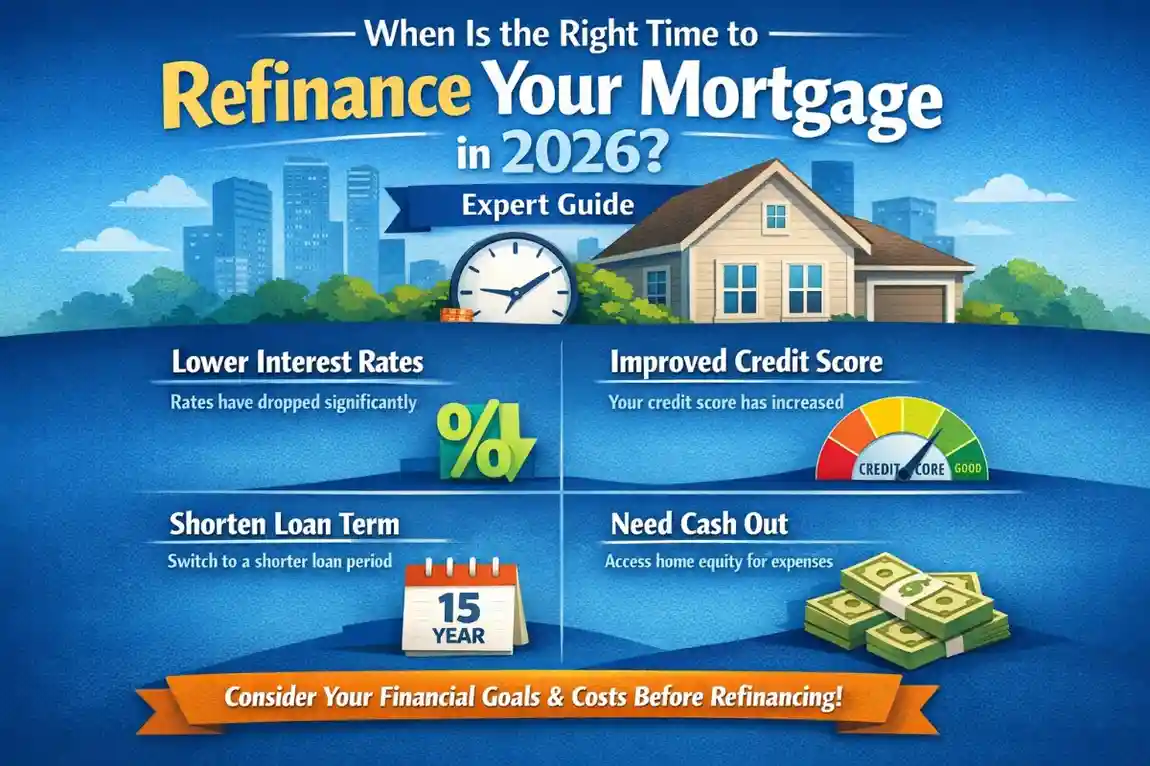
When Is the Right Time to Refinance Your Mortgage in 2026? Expert Guide
When Is the Right Time to Refinance Your Mortgage in 2026? Expert Guide
Refinancing your mortgage in 2026 can be one of the most powerful financial decisions you make—especially if you live in a Tier 1 country like the United States, United Kingdom, Canada, or Australia where mortgage balances are high and interest rate movements directly impact long-term wealth. With average home prices remaining elevated and interest rate cycles shifting globally, homeowners are actively asking: Is now the right time to refinance?
This expert guide breaks down mortgage refinancing strategies, interest rate timing, closing cost analysis, break-even calculations, cash-out refinance opportunities, debt consolidation tactics, and equity optimization to help you decide whether refinancing in 2026 will actually save you money—or cost you more.
Understanding Mortgage Refinancing in 2026
Mortgage refinancing means replacing your current home loan with a new one—usually to secure a lower interest rate, change loan terms, access home equity, or consolidate high-interest debt such as credit cards or personal loans.
In 2026, refinancing decisions are heavily influenced by:
- Interest rate trends from central banks
- Inflation stability
- Housing market valuations
- Home equity growth
- Credit score improvements
- Debt-to-income ratio changes
Because mortgage loans often range from $250,000 to $1,000,000+ in major metro areas like New York, London, Toronto, and Sydney, even a 0.5% rate reduction can translate into tens of thousands of dollars in lifetime savings.
Top Reasons to Refinance Your Mortgage in 2026
1. Interest Rates Have Dropped
The most common reason to refinance is securing a lower interest rate. Even a modest rate reduction can significantly reduce monthly payments and total interest paid.
| Loan Amount | Original Rate (6.75%) | Refinanced Rate (5.75%) | Monthly Savings | Total 30-Year Savings |
|---|---|---|---|---|
| $400,000 | $2,594 | $2,334 | $260 | $93,600 |
| $600,000 | $3,891 | $3,501 | $390 | $140,400 |
High-balance borrowers benefit most, which is why refinancing generates high financial value in high-cost housing markets.
2. You Want to Switch from Adjustable to Fixed Rate
If you currently have an adjustable-rate mortgage (ARM), refinancing into a fixed-rate mortgage protects you against future rate increases—especially important during uncertain economic cycles.
3. Cash-Out Refinance for Home Equity Access
Homeowners in 2026 are leveraging record home equity growth to fund:
- Home renovations
- Investment property purchases
- College tuition
- Business expansion
- High-interest debt consolidation
Cash-out refinancing often offers lower interest rates than personal loans or credit cards, making it a powerful wealth-building tool when used responsibly.
4. Debt Consolidation Strategy
If you are carrying credit card balances at 18%–29% APR, consolidating them into a 5%–6% mortgage refinance could dramatically reduce total interest costs.
When NOT to Refinance
Refinancing is not always the right move. Avoid refinancing if:
- You plan to move within 2–3 years
- Closing costs exceed potential savings
- Your credit score has declined
- You are near the end of your loan term
- You already have a very low fixed rate
Understanding Refinancing Costs in 2026
Refinancing is not free. Typical closing costs range between 2%–5% of the loan amount.
| Loan Size | Estimated Closing Costs (3%) |
|---|---|
| $300,000 | $9,000 |
| $500,000 | $15,000 |
| $800,000 | $24,000 |
Common refinance fees include:
- Loan origination fees
- Appraisal fees
- Title insurance
- Credit report fees
- Underwriting fees
Break-Even Analysis Formula
Break-Even Months = Total Closing Costs ÷ Monthly Savings
If your refinance costs $12,000 and saves $300 per month:
12,000 ÷ 300 = 40 months
You must stay in the home at least 40 months to justify refinancing.
Credit Score Requirements for Refinancing in 2026
| Loan Type | Minimum Credit Score | Best Rates Typically Require |
|---|---|---|
| Conventional Loan | 620 | 740+ |
| FHA Loan | 580 | 680+ |
| VA Loan | 620 (varies) | 700+ |
| Jumbo Loan | 700 | 760+ |
Improving your credit score before refinancing can dramatically improve your rate and savings potential.
Types of Mortgage Refinancing Options
Rate-and-Term Refinance
Best for lowering interest rate or adjusting loan length (30-year to 15-year).
Cash-Out Refinance
Allows homeowners to withdraw equity in cash while refinancing.
Streamline Refinance
Available for FHA and VA borrowers with reduced documentation and faster approval.
Jumbo Loan Refinance
Designed for high-value properties exceeding conforming loan limits.
Refinance Timing Strategy for 2026
1. Monitor Central Bank Policy
Interest rate cuts often trigger refinance waves.
2. Watch Inflation Trends
Lower inflation typically leads to reduced mortgage rates.
3. Lock in During Rate Dips
Even short-term dips can create significant savings opportunities.
Refinancing for Investment Property Owners
Investors can refinance rental properties to improve cash flow, fund additional purchases, or restructure portfolio debt.
However, rates for investment properties are usually 0.5%–1% higher than primary residences.
Should You Choose a 15-Year or 30-Year Refinance?
| Feature | 15-Year Loan | 30-Year Loan |
|---|---|---|
| Interest Rate | Lower | Slightly Higher |
| Monthly Payment | Higher | Lower |
| Total Interest Paid | Significantly Less | More |
| Equity Build-Up | Faster | Slower |
How to Maximize Refinancing Savings
- Improve your credit score before applying
- Shop multiple lenders
- Negotiate origination fees
- Consider buying discount points
- Calculate your break-even point
- Avoid extending your loan unnecessarily
Is 2026 a Good Year to Refinance?
The right time to refinance depends on:
- Your current mortgage rate
- Available market rates
- Your financial goals
- Your home equity position
- Projected time in home
If you can reduce your interest rate by at least 0.75%–1%, stay in your home beyond your break-even period, and improve your overall financial flexibility, refinancing in 2026 may be a strategic wealth move.
Final Verdict
Refinancing your mortgage in 2026 is not just about chasing lower rates—it’s about aligning your loan structure with your long-term financial goals. Whether you want to lower payments, eliminate debt, invest in property, or shorten your loan term, refinancing can be a high-impact financial strategy when executed properly.
Before moving forward, compare offers, calculate real savings, and consult a qualified mortgage advisor. A well-timed refinance can potentially save six figures over the life of your loan.