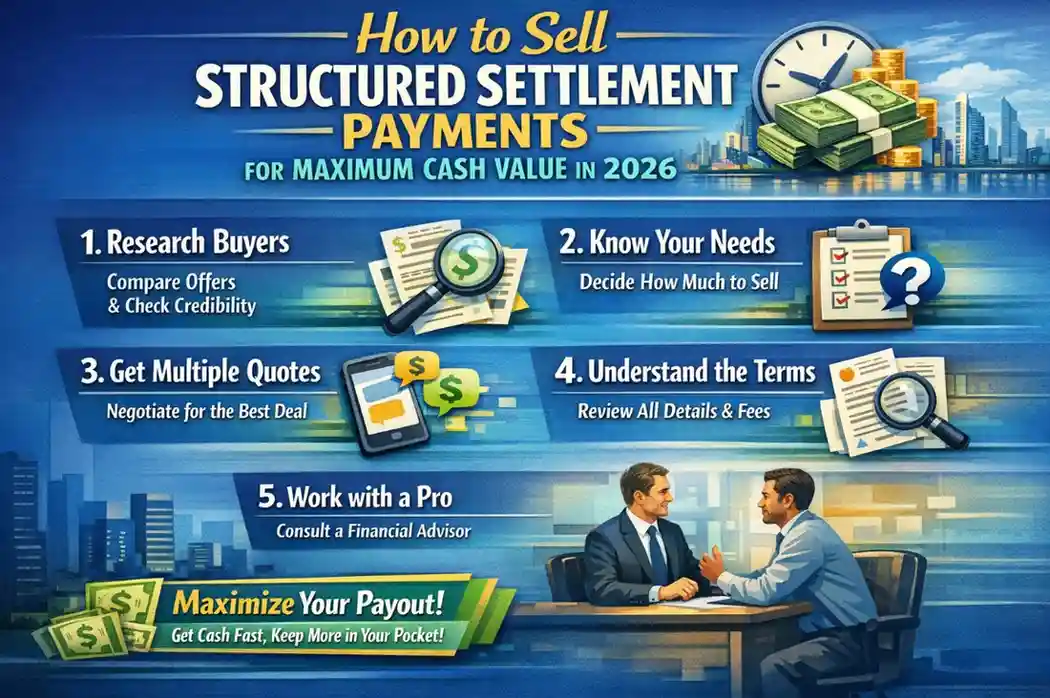
How to Sell Structured Settlement Payments for Maximum Cash Value in 2026
How to Sell Structured Settlement Payments for Maximum Cash Value in 2026
Structured settlements are designed to provide long-term financial security. However, life circumstances change. Whether you need capital for medical expenses, debt consolidation, real estate investment, business startup funding, or emergency cash flow, selling structured settlement payments for a lump sum can provide immediate liquidity.
In 2026, the structured settlement market in the United States is more competitive and regulated than ever. This guide explains how to sell structured settlement payments for maximum cash value, compares top settlement buying companies, breaks down discount rates, and outlines how to legally secure court approval.
If handled strategically, you can significantly increase your lump-sum payout while minimizing unnecessary fees.
What Is a Structured Settlement?
A structured settlement is a financial arrangement typically resulting from a lawsuit or insurance claim. Instead of receiving a one-time lump sum, the recipient receives scheduled payments over time — often funded through an annuity issued by a life insurance company.
Common Sources of Structured Settlements:
- Personal injury claims
- Medical malpractice lawsuits
- Workers’ compensation cases
- Wrongful death settlements
- Product liability claims
While structured settlements offer long-term stability and tax advantages, they may lack flexibility when immediate cash is required.
Can You Legally Sell Structured Settlement Payments?
Yes. In the United States, selling structured settlement payments is legal but requires court approval under Structured Settlement Protection Acts (SSPA) enacted in all 50 states.
The court ensures the transaction is in your best interest and protects you from predatory discount rates.
How the Selling Process Works in 2026
- Request quotes from multiple structured settlement buyers.
- Compare discount rates and fees.
- Select a buyer offering the highest lump-sum value.
- File court petition for approval.
- Attend brief court hearing.
- Receive funds (typically within 30–60 days).
Top Structured Settlement Buying Companies in 2026
| Company | Discount Rate Range | Funding Speed | Best For |
|---|---|---|---|
| J.G. Wentworth | 6% – 18% | 30–45 Days | Large Settlements |
| Peachtree Financial Solutions | 7% – 20% | 30–60 Days | Flexible Partial Sales |
| DRB Capital | 6% – 17% | 30–45 Days | Competitive Rates |
| Fairfield Funding | 7% – 19% | 30–50 Days | Personalized Service |
Understanding Discount Rates
The discount rate determines how much your future payments are reduced to calculate present cash value.
For example:
| Future Payments Value | Discount Rate | Estimated Lump Sum |
|---|---|---|
| $100,000 | 8% | $78,000 – $85,000 |
| $100,000 | 15% | $65,000 – $75,000 |
Lower discount rates result in higher cash payouts.
How to Get Maximum Cash Value
1. Request Multiple Quotes
Always compare at least 3–5 offers before choosing a buyer.
2. Negotiate the Discount Rate
Most buyers expect negotiation. Even a 1–2% reduction can mean thousands more in your pocket.
3. Consider Selling Partial Payments
Selling only a portion of your payments preserves long-term income.
4. Improve Court Presentation
Demonstrate clear financial purpose (education, debt reduction, home purchase).
Partial vs Full Settlement Sale
- Partial Sale: Sell specific payment amounts or limited years.
- Full Sale: Sell entire remaining structured settlement.
Partial sales often maximize long-term financial stability.
Are Structured Settlement Sales Taxable?
Under federal law, properly structured settlement payments from personal injury cases are generally tax-free. Selling them does not typically create income tax liability, but always consult a qualified tax advisor.
Common Fees to Watch Out For
- Administrative processing fees
- Court filing fees
- Legal documentation charges
- Transfer fees
Reputable buyers disclose all fees upfront.
Red Flags When Choosing a Buyer
- Extremely high discount rates (20%+)
- Pressure to sign quickly
- Lack of transparency in fees
- Poor customer reviews
Alternatives to Selling Structured Settlements
- Personal loans
- Home equity loans
- Business loans
- Debt consolidation financing
Sometimes alternative financing may preserve more long-term value.
Pros and Cons of Selling Structured Settlements
Pros:
- Immediate lump-sum cash
- Financial flexibility
- Debt reduction opportunity
Cons:
- Reduced total long-term payout
- Court approval required
- Possible high discount rates
2026 Market Trends
In 2026, structured settlement buyers are competing aggressively, leading to more transparent pricing models and slightly lower average discount rates compared to previous years. Increased consumer awareness has strengthened negotiating power for sellers.
Step-by-Step Strategy to Maximize Your Lump Sum
- Calculate exact future payment value.
- Obtain at least five competitive quotes.
- Negotiate discount rate aggressively.
- Consult independent financial advisor.
- Choose partial sale if possible.
- Prepare strong justification for court.
Final Verdict – Selling Structured Settlements in 2026
Selling structured settlement payments can provide immediate financial relief and investment capital, but the key to maximizing value lies in comparing buyers, negotiating discount rates, and understanding the legal approval process.
For competitive rates and established reputation, companies like J.G. Wentworth and DRB Capital remain strong contenders in 2026. However, always prioritize transparent pricing and independent financial guidance.
With the right strategy, you can convert future annuity payments into a high-value lump sum while protecting your long-term financial stability.