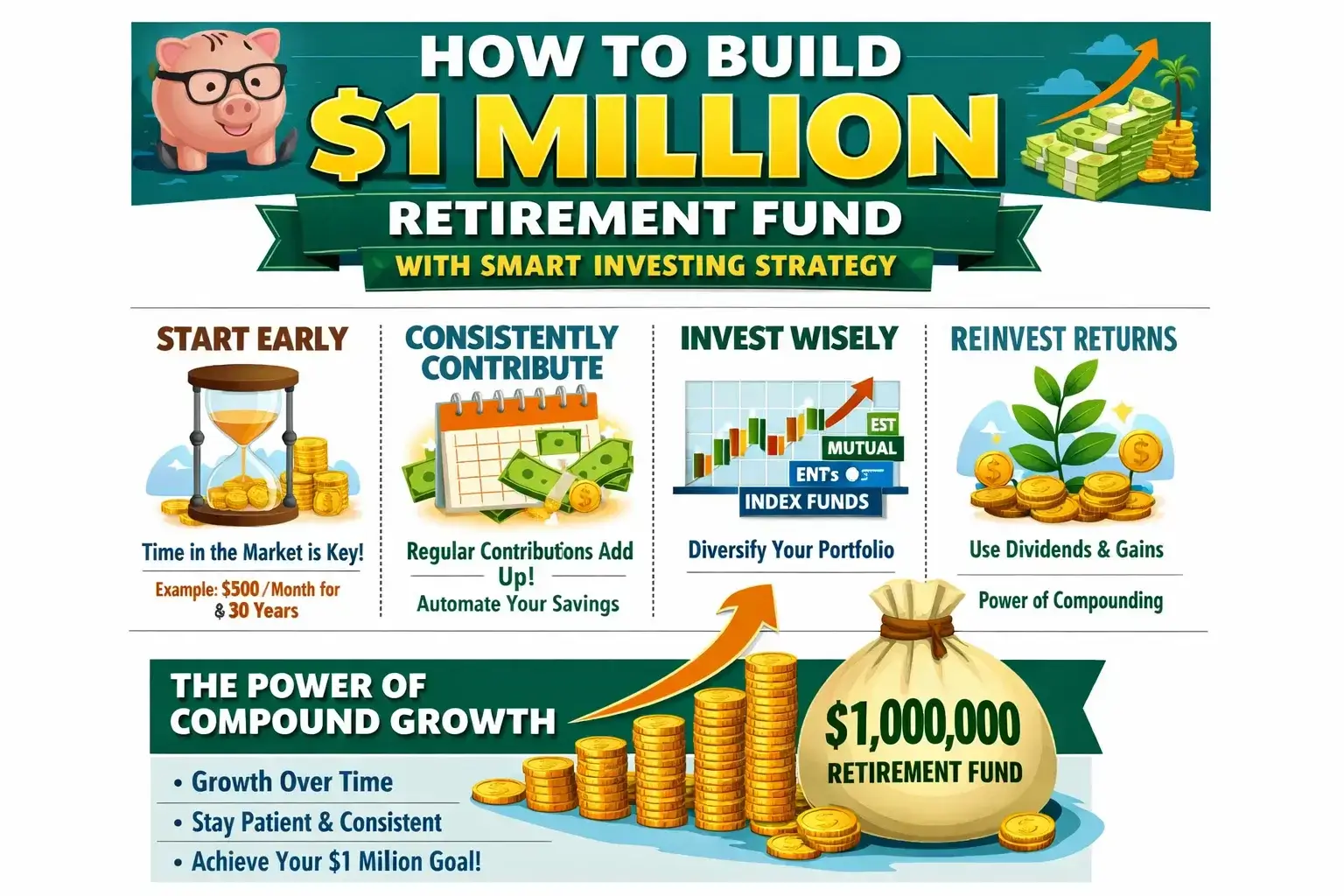
How to Build $1 Million Retirement Fund with Smart Investing Strategy
Building a $1 million retirement fund may sound ambitious, but with the right smart investing strategy, disciplined savings habits, and tax-efficient planning, it is achievable for professionals, entrepreneurs, and families across the United States, United Kingdom, Canada, and Australia.
In 2026, retirement planning is no longer optional. Rising healthcare costs, longer life expectancy, inflation pressures, and uncertain pension systems make it essential to take control of your financial future. This comprehensive guide explains exactly how to build a $1,000,000 retirement portfolio using ETFs, index funds, dividend stocks, tax-advantaged accounts, and compound growth strategies.
Why $1 Million Is a Critical Retirement Milestone
A $1 million portfolio can generate sustainable retirement income when managed correctly. Using the widely referenced 4% withdrawal rule:
- $1,000,000 × 4% = $40,000 annual income
- Combined with Social Security or pensions, this creates financial stability
- Portfolio continues growing if invested properly
However, inflation and healthcare costs require strategic investment planning — not just saving money in a bank account.
The Power of Compound Interest
Compound growth is the foundation of retirement wealth building. The earlier you start, the less you need to contribute monthly.
| Age You Start | Monthly Investment | Avg Return (10%) | Value at 65 |
|---|---|---|---|
| 25 | $500 | 10% | $1,050,000+ |
| 30 | $750 | 10% | $1,020,000+ |
| 40 | $1,800 | 10% | $1,000,000+ |
The key lesson: time in the market beats timing the market.
Step 1: Choose the Right Retirement Accounts
United States
- 401(k) with employer match
- Roth IRA
- Traditional IRA
- Health Savings Account (HSA)
United Kingdom
- Workplace Pension
- Self-Invested Personal Pension (SIPP)
- Stocks & Shares ISA
Canada
- RRSP (Registered Retirement Savings Plan)
- TFSA (Tax-Free Savings Account)
Australia
- Superannuation Fund
- Self-Managed Super Fund (SMSF)
Maximizing tax-advantaged accounts accelerates wealth accumulation.
Step 2: Build a Diversified Investment Portfolio
Diversification reduces risk and stabilizes returns.
Sample Retirement Allocation (Balanced Growth Strategy)
- 60% Broad Market Index Funds (S&P 500 / Total Market)
- 20% International ETFs
- 15% Dividend Growth Stocks
- 5% Bonds or Fixed Income ETFs
| Asset Class | Expected Return | Risk Level | Purpose |
|---|---|---|---|
| Index Funds | 8–10% | Moderate | Growth |
| International ETFs | 7–9% | Moderate | Diversification |
| Dividend Stocks | 6–8% + Yield | Low–Moderate | Income |
| Bonds | 3–5% | Low | Stability |
Step 3: Automate Monthly Contributions
Consistency is more powerful than occasional large investments.
- Set automatic transfers to brokerage accounts
- Increase contributions annually with salary raises
- Reinvest dividends automatically
Dollar-cost averaging reduces emotional investing mistakes.
Step 4: Maximize Employer Match
Employer 401(k) matching is essentially free money. If your employer matches 5%, contribute at least that amount.
Example:
| Salary | 5% Contribution | Employer Match | Total Annual Investment |
|---|---|---|---|
| $80,000 | $4,000 | $4,000 | $8,000 |
Step 5: Optimize for Tax Efficiency
- Hold dividend stocks in tax-advantaged accounts
- Use ETFs for taxable brokerage accounts
- Harvest capital losses strategically
- Prioritize Roth accounts for long-term tax-free withdrawals
Tax optimization significantly increases net retirement income.
Step 6: Increase Contributions Over Time
As income grows, retirement contributions should increase proportionally.
- Start with 10–15% of income
- Aim for 20%+ as salary increases
- Use bonuses for lump-sum investing
Step 7: Rebalance Annually
Market fluctuations change portfolio allocations. Annual rebalancing ensures risk remains aligned with your goals.
Retirement Income Strategy at $1 Million
4% Rule Strategy
Withdraw 4% annually, adjust for inflation.
Dividend Income Strategy
Invest in dividend growth stocks yielding 3–4% to generate income without selling assets.
Bucket Strategy
- Bucket 1: Cash (1–2 years expenses)
- Bucket 2: Bonds (3–5 years)
- Bucket 3: Stocks for growth
Early Retirement (FIRE Movement)
Financial Independence, Retire Early (FIRE) strategies focus on aggressive savings rates (40–60%) and low-cost index investing.
To retire early:
- Reduce lifestyle inflation
- Increase income streams
- Invest consistently
- Build passive income assets
Common Retirement Planning Mistakes
- Starting too late
- Holding too much cash
- Ignoring inflation
- Withdrawing too aggressively
- Failing to diversify
Example 25-Year Wealth Growth Scenario
| Year | Annual Investment | Total Invested | Portfolio Value (10%) |
|---|---|---|---|
| 10 | $12,000 | $120,000 | $191,000+ |
| 20 | $12,000 | $240,000 | $720,000+ |
| 25 | $12,000 | $300,000 | $1,180,000+ |
Protecting Your Retirement Wealth
- Diversify globally
- Maintain emergency fund
- Purchase adequate health insurance
- Consider long-term care insurance
- Create estate planning documents
Final Action Plan
- Open retirement investment accounts
- Automate monthly contributions
- Invest primarily in low-cost index funds & ETFs
- Reinvest dividends
- Increase savings rate annually
- Review and rebalance yearly
Building a $1 million retirement fund is not about luck — it’s about consistency, discipline, and smart investing strategy. With the right allocation, tax efficiency, and long-term mindset, financial independence is achievable.
Disclaimer: Investment returns are not guaranteed. Consult a licensed financial advisor before making investment decisions.