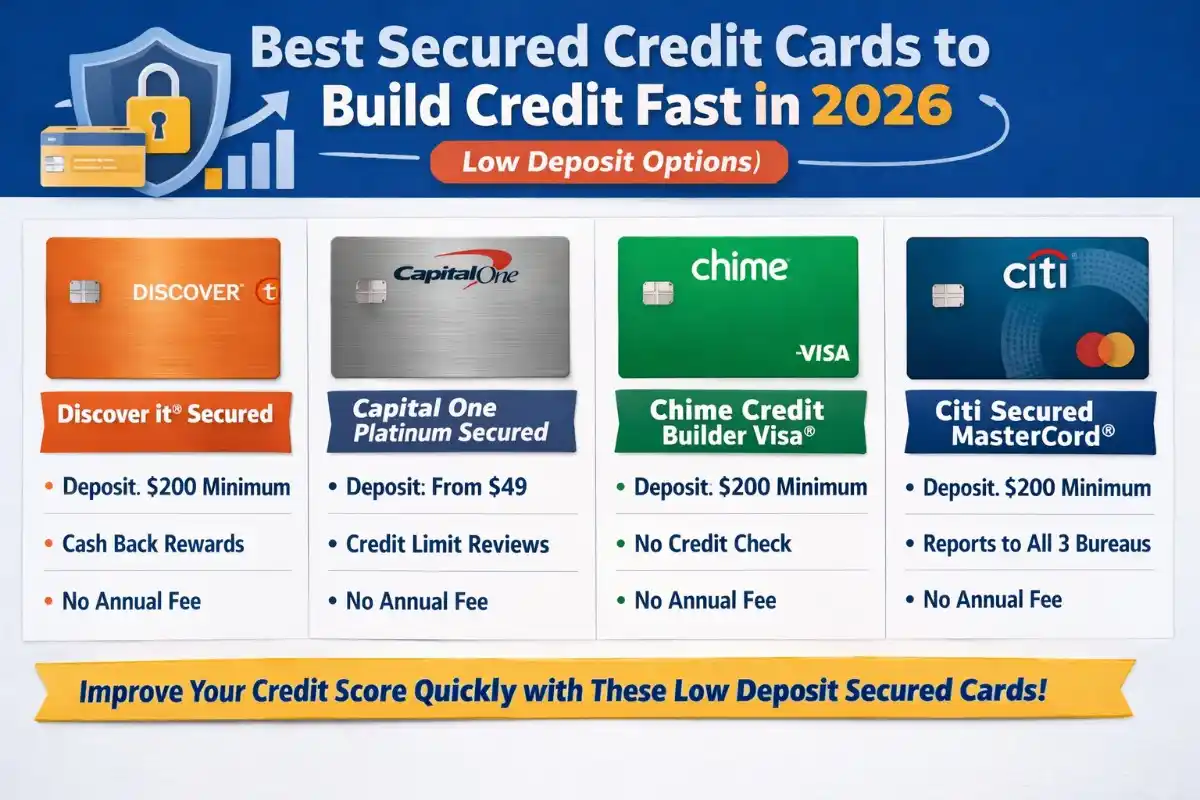
Best Secured Credit Cards to Build Credit Fast in 2026 (Low Deposit Options)
Best Secured Credit Cards to Build Credit Fast in 2026 (Low Deposit Options)
Building or rebuilding credit in 2026 has become more important than ever. Whether you're recovering from past financial hardship, starting fresh with no credit history, or looking to boost your FICO score quickly, a secured credit card can be one of the most powerful tools available.
With rising interest rates, stricter lending standards, and higher approval thresholds for mortgages, auto loans, and premium credit cards, consumers in the United States and other Tier 1 countries need strategic credit-building solutions. The right secured card can help you improve your score in as little as 3–6 months — if used responsibly.
This comprehensive 2026 guide compares the best secured credit cards with low deposit requirements, explains how they work, and shows you how to maximize your credit score improvement safely and efficiently.
What Is a Secured Credit Card?
A secured credit card is a credit-building card that requires a refundable security deposit. This deposit acts as collateral and usually determines your credit limit.
For example:
- You deposit $200.
- Your credit limit becomes $200.
- Your activity is reported to the three major credit bureaus.
Unlike prepaid cards, secured cards help build credit because they report payment history to Experian, Equifax, and TransUnion.
Why Secured Credit Cards Work So Well in 2026
Credit scoring models such as FICO and VantageScore prioritize:
- Payment history (35%)
- Credit utilization ratio (30%)
- Length of credit history
- Credit mix
- New credit inquiries
Secured cards directly improve payment history and utilization — the two largest components of your score.
Best Secured Credit Cards in 2026 (Low Deposit Options)
| Card Name | Minimum Deposit | Annual Fee | Reports to 3 Bureaus | Upgrade to Unsecured? |
|---|---|---|---|---|
| Discover it® Secured | $200 | $0 | Yes | Yes |
| Capital One Platinum Secured | $49–$200 | $0 | Yes | Yes |
| Citi Secured Mastercard | $200 | $0 | Yes | Yes |
| Bank of America® Customized Cash Secured | $200 | $0 | Yes | Yes |
| OpenSky® Secured Visa | $200 | $35 | Yes | Limited |
Note: Approval terms and deposit requirements may vary based on credit profile.
Top Pick: Discover it® Secured
Why it stands out in 2026:
- No annual fee
- Cashback rewards (rare for secured cards)
- Automatic account review for graduation
- Free FICO score tracking
It’s one of the few secured cards offering rewards while building credit.
Lowest Deposit Option: Capital One Platinum Secured
Some applicants may qualify for a $49 or $99 deposit with a $200 credit line — making it one of the most accessible entry-level secured cards in 2026.
How to Build Credit Fast with a Secured Card
1. Keep Utilization Below 10%
If your credit limit is $200, keep balances under $20 before statement closing date.
2. Pay On Time — Every Time
Payment history is the single most important factor in your credit score.
3. Enable AutoPay
Avoid late fees and protect your credit profile.
4. Request Credit Line Increases
Higher limits lower utilization ratios and boost scores.
5. Graduate to an Unsecured Card
Many secured cards automatically review accounts after 6–12 months.
How Fast Can You Improve Your Credit Score?
| Starting Score | Timeframe | Potential Improvement |
|---|---|---|
| 500–580 | 3–6 Months | +40 to +80 points |
| 580–620 | 6 Months | +30 to +60 points |
| 620–650 | 6–9 Months | +20 to +40 points |
Results vary based on total credit profile and existing accounts.
Secured vs Unsecured Credit Cards
| Feature | Secured Card | Unsecured Card |
|---|---|---|
| Security Deposit | Required | Not Required |
| Approval Odds | High | Depends on Score |
| Credit Building | Yes | Yes |
| Rewards | Limited | Often Higher |
Who Should Get a Secured Credit Card?
- Consumers with bad credit (below 580)
- Young adults with no credit history
- Recent immigrants to the USA
- Individuals rebuilding after bankruptcy
- People denied traditional credit cards
Common Mistakes to Avoid
- Maxing out your credit limit
- Missing payments
- Closing the card too early
- Applying for multiple cards simultaneously
Are Secured Credit Cards Worth It in 2026?
Yes — especially if your goal is to qualify for:
- Mortgage loans
- Auto financing
- Personal loans
- Premium travel credit cards
A 100-point improvement in your credit score can save thousands in interest over time.
Frequently Asked Questions
Do secured cards guarantee approval?
Most secured cards have high approval rates, but identity verification is required.
Will I get my deposit back?
Yes, if you close the account in good standing or graduate to unsecured.
Can secured cards hurt my credit?
Only if you miss payments or maintain high balances.
Final Thoughts
The best secured credit cards in 2026 offer low deposits, no annual fees, and pathways to unsecured credit. When used strategically, they are one of the fastest and safest ways to build credit from scratch or recover from financial setbacks.
If you're serious about improving your credit score this year, opening the right secured card and managing it responsibly can transform your financial future.
Disclaimer: This content is for informational purposes only and does not constitute financial advice. Terms and offers may change. Always review official card issuer details before applying.