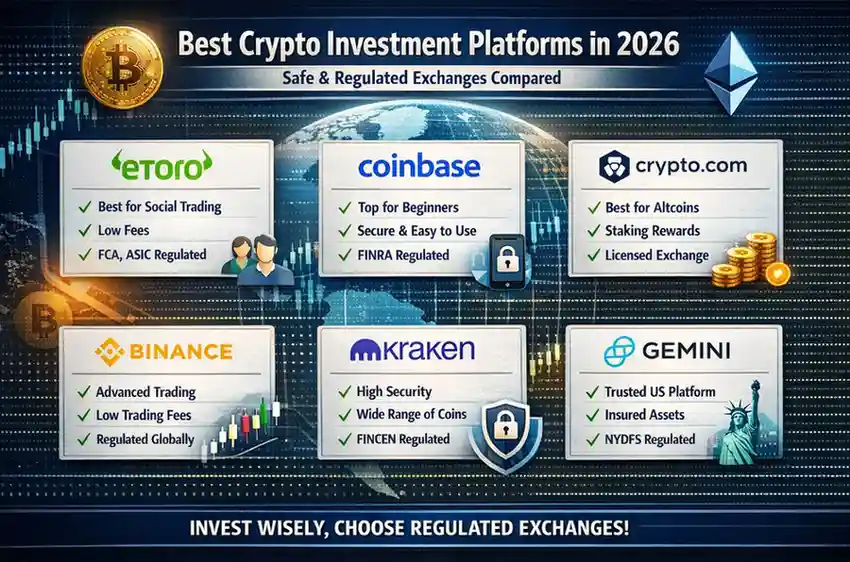
Best Crypto Investment Platforms in 2026 – Safe & Regulated Exchanges Compared
Best Crypto Investment Platforms in 2026 – Safe & Regulated Exchanges Compared
Cryptocurrency adoption continues to accelerate in 2026, with both retail and institutional investors allocating capital to digital assets such as Bitcoin, Ethereum, stablecoins, and tokenized securities. However, after years of regulatory tightening and exchange failures in earlier cycles, investors are now prioritizing safe and regulated crypto investment platforms more than ever.
If you are investing in crypto in Tier 1 countries like the United States, Canada, the United Kingdom, or Australia, choosing a compliant, secure, and transparent exchange is critical. This in-depth guide compares the best crypto exchanges in 2026 based on security, regulation, fees, asset selection, staking rewards, and user experience.
What Makes a Crypto Platform Safe in 2026?
Regulatory oversight and institutional-grade custody have become major differentiators. The most reputable crypto platforms now offer:
- Full KYC/AML compliance
- Cold storage asset custody
- Insurance coverage against breaches
- Proof-of-reserves transparency
- Two-factor authentication (2FA)
- Advanced encryption protocols
Security and compliance are no longer optional — they are mandatory for long-term sustainability in the crypto industry.
Best Crypto Investment Platforms in 2026
| Platform | Regulation Status | Trading Fees | Best For | Staking Available |
|---|---|---|---|---|
| Coinbase | US Regulated & Public Company | 0% – 0.60% | Beginners & Institutions | Yes |
| Kraken | US Compliant | 0% – 0.40% | Advanced Traders | Yes |
| Gemini | NYDFS Regulated | 0.20% – 0.40% | Security Focused Investors | Limited |
| Crypto.com | Global Regulatory Approvals | 0% – 0.40% | Mobile Trading & Rewards | Yes |
| Bitstamp | EU Licensed Exchange | 0% – 0.30% | Low Fee Trading | No |
Coinbase – Best Overall Regulated Crypto Platform
Coinbase remains one of the most trusted cryptocurrency exchanges in 2026. As a publicly traded U.S. company, it adheres to strict regulatory compliance and financial reporting standards.
Key Benefits:
- Strong regulatory transparency
- Institutional custody services
- Easy-to-use interface
- Recurring crypto investments
- Crypto staking rewards
Kraken – Best for Low Fees & Advanced Trading
Kraken offers competitive maker-taker fees and advanced charting tools for professional traders.
- Margin trading options
- Futures contracts (where permitted)
- High liquidity pairs
- Strong cybersecurity track record
Gemini – Best for Compliance & Security
Gemini operates under New York regulatory oversight, making it one of the strictest compliant exchanges in North America.
- Insurance on digital assets
- Advanced custody services
- Secure cold storage model
Crypto Trading Fees Comparison (2026)
| Trading Volume | Average Fee Range |
|---|---|
| Under $10,000/month | 0.30% – 0.60% |
| $10,000–$100,000 | 0.10% – 0.30% |
| $100,000+ | 0% – 0.20% |
Crypto Staking Platforms in 2026
Staking allows investors to earn passive rewards on supported cryptocurrencies. Popular staking coins include:
- Ethereum (ETH)
- Solana (SOL)
- Cardano (ADA)
- Polkadot (DOT)
Annual staking yields typically range between 3% and 8% depending on the network and platform.
How to Choose the Right Crypto Exchange
1. Regulatory Compliance
Choose exchanges registered in your country.
2. Fee Structure
Review maker vs taker fees and hidden spreads.
3. Asset Availability
Ensure your preferred cryptocurrencies are supported.
4. Security Protocols
Look for proof-of-reserves and cold storage practices.
5. Withdrawal Policies
Check daily withdrawal limits and processing times.
Risks of Crypto Investing in 2026
- Market volatility
- Regulatory changes
- Platform security breaches
- Liquidity risks
Always diversify and avoid investing more than you can afford to lose.
Institutional-Grade Crypto Custody
Large investors increasingly use third-party custody providers to secure digital assets offline. Cold wallet storage and multi-signature wallets are now industry standards for asset protection.
Tax Implications of Crypto Investing
In the United States and many Tier 1 jurisdictions, crypto gains are subject to capital gains tax. Investors should maintain detailed transaction records for reporting purposes.
Final Verdict – Best Crypto Investment Platforms in 2026
For beginners and regulatory trust: Coinbase
For advanced traders and lower fees: Kraken
For security-first investors: Gemini
The best crypto platform ultimately depends on your investment strategy, trading frequency, and security preferences. In 2026, regulation and transparency are shaping the next generation of crypto exchanges, making investor protection a top priority.
Before investing, compare fee structures, regulatory status, and custody policies carefully. A secure and compliant exchange is the foundation of successful long-term crypto investing.